A small enclosure does not make a ball python feel safer. Security comes from tight-fitting hides, visual cover, stable temperatures and enough clutter to move unseen—not from restricting the space available.
Table of Contents
Advertisement
4 × 2 × 2 ft is the adult minimum
A 4 ft × 2 ft × 2 ft vivarium is a sensible minimum for most adult Python regius, also called a ball python or royal python. It gives roughly 122 cm of length for movement, 61 cm of width for turning and furniture, and 61 cm of height for low climbing branches and usable enrichment.
| Life stage | Typical body length | Temporary minimum | Recommended home | Approx. Volume |
|---|---|---|---|---|
| Hatchling | 30 to 50 cm | 24 × 18 × 12 in 61 × 46 × 30 cm | 36 × 18 × 18 in, or furnished 4 × 2 × 2 ft | 22 to 40 gal |
| Small juvenile | 50 to 90 cm | 36 × 18 × 18 in 91 × 46 × 46 cm | 4 × 2 × 2 ft 122 × 61 × 61 cm | 50 to 120 gal |
| Adult | 90 to 150 cm | Not a long-term stage | 4 × 2 × 2 ft minimum | About 120 gal |
| Large adult | Over 150 cm | Not suitable | 5 × 2 × 2 ft or longer | 150 gal or more |
Gallons are a poor way to choose a rectangular vivarium because they describe volume, not useful shape. Think of two rooms with the same amount of air: one can be long enough to walk through, while the other is tall and narrow.
A larger home is not the stressful part
A well-furnished larger enclosure does not inherently stress a ball python. The problem is usually an empty box where the snake feels exposed, like sitting in the middle of a bare football pitch with nowhere to shelter.
Use “ideal” as a planning target rather than treating one nominal size as suitable forever.
- For a hatchling, 24 × 18 × 12 in (61 × 46 × 30 cm, about 22 US gal) can be a short-term minimum.
- A 36 × 18 × 18 in vivarium (91 × 46 × 46 cm, about 50 US gal) is a practical juvenile step.
- A furnished 4 × 2 × 2 ft vivarium (48 × 24 × 24 in, or roughly 122 × 61 × 61 cm, about 120 US gal) can be used from the start.
- For an adult ball python vivarium, that 4 ft size is the minimum only when its usable internal length matches the snake; a large adult ball python should have a vivarium 5 ft or longer when it does not.
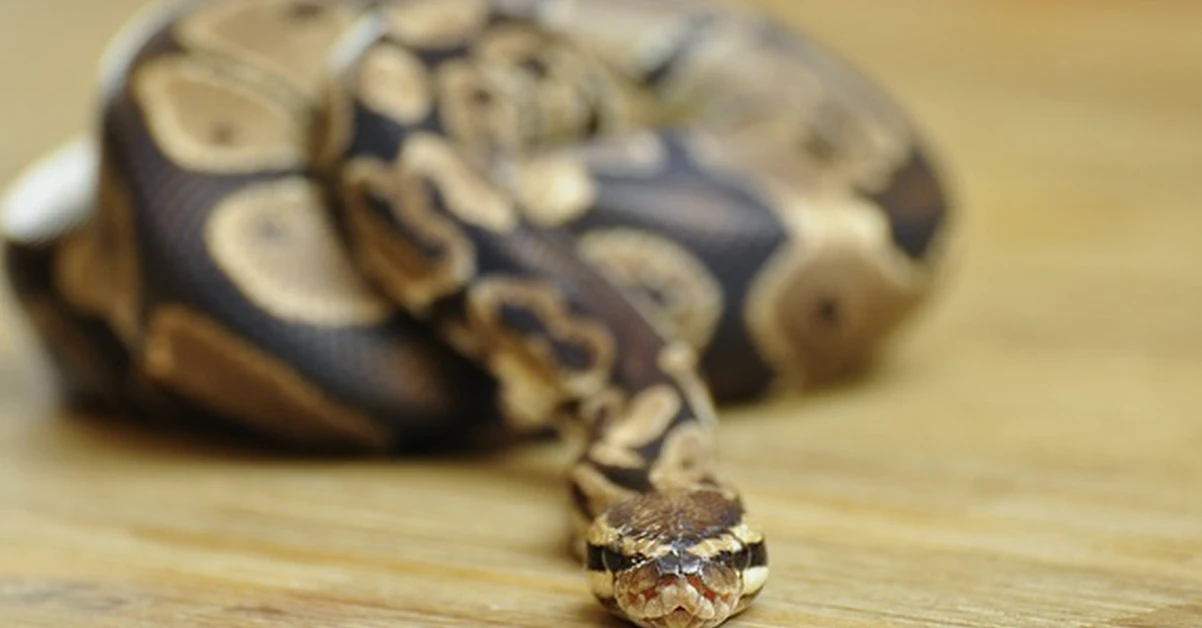
Ball python enclosure size in cm: temporary versus permanent homes
A small enclosure can be useful during quarantine, transport recovery or the first weeks with a very young hatchling, but it should not be treated as the permanent standard. The long-term enclosure must allow an adult snake to stretch, thermoregulate, hide and move through a furnished environment. For a detailed comparison of practical dimensions, see our guide to ball python enclosure size cm.
| Life stage or use | Minimum internal dimensions in cm | Appropriate use |
|---|---|---|
| Hatchling temporary enclosure | 61 × 46 × 30 cm | Short-term setup with secure hides |
| Juvenile enclosure | 91 × 46 × 46 cm | Growing snake; not suitable for every adult |
| Typical adult permanent enclosure | 122 × 61 × 61 cm | Baseline for an average-sized adult |
| Large adult permanent enclosure | 152 × 61 × 61 cm or longer | Needed when a 122 cm enclosure is shorter than the snake |
Adult ball pythons commonly reach around 90 to 150 cm, although individual size varies. A permanent vivarium should be planned around the actual snake, not an assumed adult average.
More room is not harmful when it is enriched properly. Add snug hides at both ends, cluttered cover, branches, leaf litter and varied textures so the snake can choose security as well as space.
Advertisement
Match vivarium length to your snake
Choose an enclosure with usable internal length equal to or greater than your ball python’s body length. This simple rule avoids buying by age, sex or a vague gallon label, all of which can mislead when an individual grows larger than expected.
Male and female sizes are only clues
Female royal pythons often become longer and heavier than males, but sex does not decide the final vivarium size. A large male can outgrow a 4 ft enclosure, while a smaller female may fit the baseline well.
A juvenile should move into its adult enclosure when it approaches the current vivarium’s usable length or cannot have a warm hide, cool hide and open travel route at once. For many snakes this happens between 12 and 24 months, but growth rates vary with genetics, feeding and health.
Make a 4 × 2 × 2 ft vivarium secure
A 4 × 2 × 2 ft vivarium works when it has at least two snug hides, visual clutter, branches, suitable substrate and a thermostat-controlled thermal gradient. A thermal gradient means one warm end and one cooler end, so the snake can choose the temperature it needs without staying exposed.
Place hides at both temperature ends
Put a warm hide at the heated end and a cool hide at the opposite end. Each hide should let the snake touch the roof and sides while curled, like choosing a snug sleeping bag rather than a large empty tent.
Add cover without blocking movement
Use cork bark, artificial plants, leaf litter, tunnels and sturdy climbing branches to break long sightlines. The snake should be able to travel from warm end to cool end under cover, rather than crossing a wide bare area.
A full-length vivarium is easier to furnish and heat safely when its internal dimensions are clearly stated. Check that the enclosure can hold two hides, branches and a guarded heat source without losing the travel route.
- Provides 4 ft of length for most adult royal pythons to stretch and move between heat zones
- Leaves enough width for warm and cool hides without forcing the snake into open space
- Allows branches and clutter to be added while keeping a secure, escape-proof layout
Heat the enclosure with control
A thermostat is a control device that turns heat down or off before it becomes unsafe. A radiant heat panel or guarded ceramic heat emitter can warm a large wooden vivarium or PVC vivarium effectively, while a heat mat alone often cannot heat the air in a 4 ft enclosure well.
Humidity belongs alongside heat, cover and security in good Python regius husbandry. Aim for roughly 55–70% relative humidity in a royal python enclosure, measured with a reliable digital hygrometer rather than guessed from condensation. The substrate should not remain wet throughout the vivarium: provide a humid hide or a slightly damp area when needed, while keeping the warm hide dry and allowing adequate ventilation.
Check that the vivarium heat zones still work after adding cover, because dense planting and décor can alter airflow. Secure, locking doors and covered cable gaps matter too; snake enclosure enrichment is only useful when the furnished snake enclosure remains escape-proof.
Why 36 × 18 × 18 is not adult-sized
A 36 × 18 × 18 inch vivarium is usually too short as a permanent adult home because many royal pythons grow beyond its 91 cm length. It can be safe for a small juvenile, but temporary suitability is not the same as meeting adult welfare needs for 20 years or more.
A common real-world buying mistake
Buying a 4 ft enclosure first is often cheaper over time, provided it is furnished properly from day one. A hatchling does not need to earn a larger home by growing; it needs safe cover and stable conditions.
A 4 ft vivarium is a minimum, not a ceiling. Choose 5 ft or more when the snake’s relaxed body length approaches or exceeds the usable internal length, or where an unusually active snake cannot move through a covered route without crowding its hides and branches.
Advertisement
Questions & answers
What size should a ball python enclosure be?
Most adult ball pythons need at least 4 × 2 × 2 ft, which is 48 × 24 × 24 inches or about 122 × 61 × 61 cm. The usable internal length should equal or exceed the snake’s own body length.
Can a ball python live in a 4x2x2?
Yes, most adults can live well in a 4 × 2 × 2 ft enclosure when it has warm and cool hides, clutter and thermostat-controlled heating. Hatchlings can also live in this size if the enclosure is not left open and bare.
Can a ball python live in a 36x18x18?
Yes, a 36 × 18 × 18 inch enclosure can suit a hatchling or small juvenile temporarily. At 91 cm long, it is generally too short to be a permanent home for most adult royal pythons.
Do ball pythons grow to the size of their enclosure?
No, restricting enclosure size does not safely control growth. It can limit movement, environmental choice and normal behaviour while the snake still grows according to genetics, feeding and health.
What size enclosure does a male ball python need?
A male needs an enclosure based on his measured body length, not his sex. Many adult males fit a 4 ft vivarium, but a male over about 122 cm may need a 5 ft enclosure or longer.
Related sources
These articles can help you explore the topic in more depth:
- Ball Python Terrarium Size & Lighting — reptifiles.com
- What is the appropriate sized enclosure for an adult ball ... — reddit.com
- How To Care For a Royal Python — rspca.org.uk
- Royal (Ball) pythons as pets and what setup you need — exoticdirect.co.uk

The Reptile Vivarium Team
Our guides are based on comparing specialised reptile care sources, keeper community input, and recognised husbandry guidelines — we are not vets or professional breeders, and we say so where it matters.
The information on this site is general in nature. For any concerns about the health or welfare of your reptile or amphibian, always consult an exotics vet.