The vivarium arrives, the advertised dimensions look generous, and a starter kit promises everything you need. Once the substrate, water bowl, hides, thermostat probe and branches are inside, the usable floor space can feel very different. For a corn snake or ball python, that difference affects far more than appearance.
Table of Contents
Advertisement
Is this vivarium suitable for your snake?
A suitable vivarium lets a snake rest securely, choose between warm and cool areas, drink, move and explore without risking escape.
Does its internal space suit the snake?
Internal space means the area inside after frames, sliding-door tracks and fixed equipment have taken their share. Think of buying a wardrobe: its outside width is not the hanging space once the side panels and drawers are counted.
Can warm and cool zones both work?
The warm end must contain a secure hide, and the cool end needs another secure hide. Otherwise, the snake may have to choose between feeling safe and reaching the temperature it needs to digest food or rest.
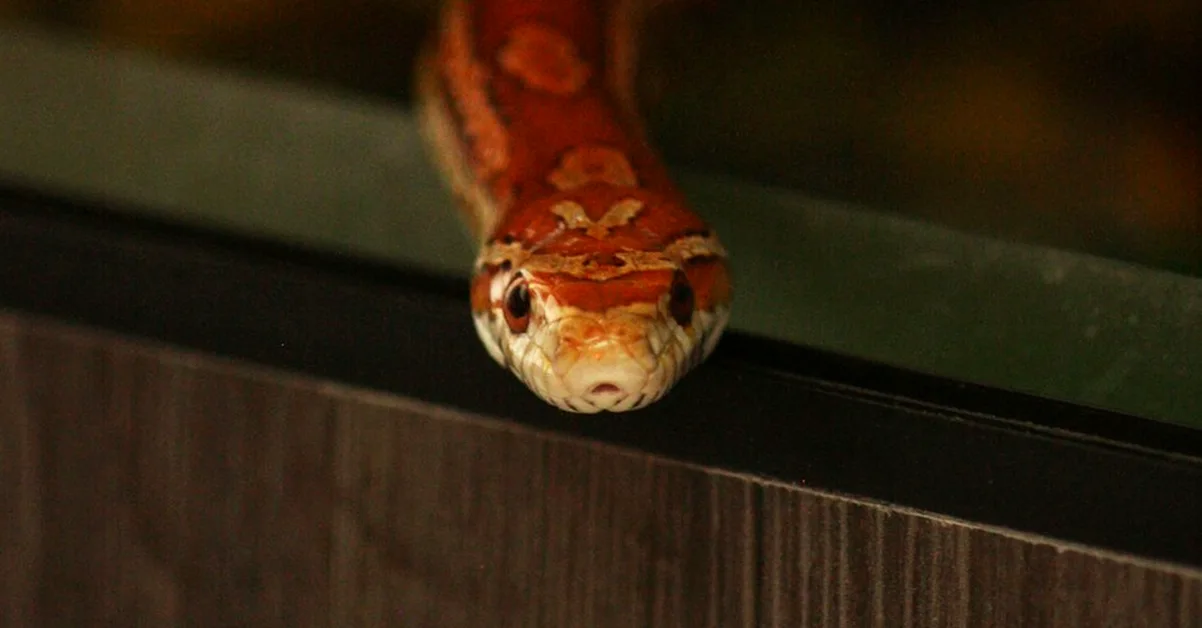
Measure usable space, not the size on the box
Commercial measurements can mislead because they usually describe the outer cabinet. A listed 120 × 60 × 60 cm snake vivarium may lose several centimetres to wall thickness, door runners, a raised base and internal fittings, leaving less clear space than expected.
How should you measure a vivarium?
Use a tape measure inside the empty enclosure before adding substrate. Measure from the inside face of one wall to the opposite wall, then repeat for depth and height from substrate level to the lowest safe point beneath lamps or guards.
Write down four figures: internal length, internal width, usable height and floor space blocked by fixed items. Do not count unsafe space directly below an unguarded ceramic heat emitter or a branch that cannot safely hold the snake's weight.
Which enclosure shape fits each lifestyle?
Terrestrial snakes mainly use floor space, though many still enjoy safe branches and raised resting points.
| Snake profile | Priority space | How it should be furnished | Common mistake |
|---|---|---|---|
| Adult corn snake | Length and width, plus usable climbing height | Warm and cool hides, branches, cover and water | Buying a narrow 4 ft cabinet with little depth |
| Adult ball python | Secure floor area and stable conditions | Snug hides, clutter, humidity-safe substrate and bowl | Leaving a large open floor with one hide |
| Arboreal species | Meaningful height and branch routes | Fixed branches, elevated cover and safe access | Treating height as decorative only |
| Juvenile | Security across the whole enclosure | Several small hides and visual barriers | Keeping it in a tiny enclosure for years |
There is no single minimum size that suits every snake, but internal enclosure dimensions should be planned around the adult animal rather than the size at purchase. For a terrestrial adult corn snake enclosure, prioritise enough internal length and width for the snake to travel, turn and use both temperature zones without every item touching; a 4 ft enclosure may be appropriate for some adults only where its internal depth and furnishing are also adequate.
A ball python enclosure needs secure usable floor space, not simply height, while an arboreal snake enclosure needs meaningful vertical routes as well as a safe footprint. Juveniles can use a larger adult enclosure if secure hides, clutter and appropriately placed cover make every area feel accessible.
Advertisement
A bigger enclosure works only with cover and heat
A large enclosure is usually beneficial when it remains secure, well furnished and correctly heated.
When does a large enclosure feel unsafe?
A large enclosure feels unsafe when it contains one hide, bare glass and a distant water bowl. It is like sleeping in the middle of a brightly lit village hall with no chair, curtain or corner to retreat into.
What makes a small enclosure restrictive?
A small enclosure is restrictive when the snake cannot fully use warm and cool zones, stretch naturally or move around its water and hides. It may still eat, but eating alone does not prove that housing is meeting welfare needs.
When comparing snake enclosure listings in the UK, filter by internal measurements and lock type before looking at bundled accessories. A suitable cabinet is the foundation; hides and heating only work properly when it has enough usable room.
- Lets you compare 4 ft and larger cabinets by internal length, width and safe height
- Helps identify models with lockable doors and protected ventilation points
- Makes it easier to buy adult-suitable housing before bringing the snake home
Watch how the snake uses the completed enclosure after it has settled. Repeatedly pushing at doors, climbing the same corners, rubbing the nose, remaining only at one end or avoiding both hides can indicate that the enclosure is insecure, poorly furnished or not offering workable warm and cool zones. A snake that never leaves one hide may simply be resting, but this pattern becomes more concerning when paired with incorrect readings, obvious exposure, poor sheds or a lack of normal exploratory activity at appropriate times.
Check the enclosure before assuming the animal needs less space: confirm temperatures, humidity, cover, water access, secure locks and whether snake climbing branches or hides have been placed so they support the species’ natural movement.
Audit heating, locks and starter kit claims
A snake enclosure starter kit is suitable only when its thermostat, heat source, doors and ventilation match the adult species and the room.
Does the heat source make a gradient?
Test the enclosure for at least 48 to 72 hours with substrate, hides and water in place. Check the warm hide, cool hide and the middle area using reliable digital probes, because one reading beside the heater cannot describe the whole enclosure.
Are the doors truly escape-proof?
An escape-proof enclosure has no usable gap at doors, vents, cable routes or lid edges. Check every opening with the same care used for a toddler gate: if there is a weak point, a determined animal may find it.
A stable gradient depends on more than one heater. Use a thermostat probe positioned where the snake can actually contact or rest near the warm area, and verify temperatures with separate digital thermometers at the warm and cool ends. If using a ceramic heat emitter, fit an appropriate guard so the snake cannot touch it, and choose safe heat equipment that can maintain conditions without overheating the enclosure. Humidity should be checked with a reliable hygrometer at the level the snake uses, because damp substrate and a wet corner are not the same as suitable air humidity.
Good vivarium ventilation allows fresh-air exchange without creating a cold draught, while lighting should reflect the species’ day-and-night routine rather than adding unnecessary brightness or heat.
Place the vivarium for stable conditions in English homes
Put the vivarium on a sturdy raised stand, away from direct sun, radiators, draughts and busy routes through the home.
Can the enclosure go on the floor?
A snake enclosure can sit on the floor, but a raised stand is normally the safer choice. Floor-level cabinets are more exposed to cold draughts, dogs, vacuum cleaners, spilled water and heavy footfall.
Why avoid windows and radiators?
Direct sun can overheat a vivarium even when the room feels chilly. A radiator can do the reverse of what keepers expect, creating sudden warmth at the cool end and weakening the gradient.
Before buying, make one written check: internal dimensions, adult species needs, 48 to 72 hours of stable readings, two secure hides, secure locks and a calm room position. If one item fails, pause the purchase and correct it first. For related set-up help, see our guides to corn snake enclosures, ball python humidity and vivarium thermostats.
Advertisement
Frequently asked questions
What is the minimum size for a snake enclosure?
Minimum enclosure size depends on species, adult length, activity and usable internal dimensions. The enclosure must still fit a warm hide, cool hide, water bowl and safe movement routes, so an advertised external measurement alone cannot answer it.
What does a good snake enclosure look like?
A good snake enclosure is secure, heated by a controlled thermal gradient and furnished with hides at both temperature ends. It should also have suitable substrate, a stable water bowl, safe ventilation and branches or cover that match the species.
Can I put a snake enclosure on the floor?
You can place a snake enclosure on the floor, but a raised stand is usually safer in most English homes. Choose floor placement only if it avoids draughts, pets, traffic, damp and unstable temperatures.
Can a snake enclosure be too big?
A snake enclosure is rarely too big when it has several snug hides, visual cover and stable temperatures. A large bare enclosure can feel exposed, especially for juveniles, so add cover rather than simply reducing space.
Are starter kits suitable for adult corn snakes?
Many starter kits suit a young corn snake temporarily but not an adult without upgrades. Check internal length and depth, thermostat capacity, lock quality and whether the supplied hides remain appropriately sized as the snake grows.
- Measure internal usable space, not the dimensions printed on the product listing.
- Give the snake secure hides at both warm and cool ends, so safety never conflicts with temperature choice.
- Test heating and humidity in the furnished vivarium for 48 to 72 hours before the snake arrives.
- Choose a raised, quiet position away from windows, radiators, draughts and household disturbance.
Learn more
Here are some additional resources on this subject:
- Snake Terrariums & Snake Vivariums UK | Snake Housing — reptiles.swelluk.com
- How To Care For a Corn Snake — rspca.org.uk
- Guidance on keeping Venomous Snakes and Lizards — daera-ni.gov.uk
- One thermometer won't reveal your vivarium's gradient
- Animal Rights Week and the Right Reptile Vivarium

The Reptile Vivarium Team
Our guides are based on comparing specialised reptile care sources, keeper community input, and recognised husbandry guidelines — we are not vets or professional breeders, and we say so where it matters.
The information on this site is general in nature. For any concerns about the health or welfare of your reptile or amphibian, always consult an exotics vet.