A 4 × 2 × 2 ft vivarium is not automatically suitable for a bearded dragon. Its outside dimensions can hide a smaller usable floor area once you account for wall thickness, substrate depth, door tracks and raised furnishings. A starter kit may still work, but only if its heat and lighting layout remains safe at your dragon’s level.
A suitable bearded dragon vivarium is not judged by litres or outside measurements alone. For most adult dragons, start with at least 120 × 60 × 60 cm of usable internal space, then check that you can provide a safe basking surface, a genuinely cooler retreat and effective UVB at the animal’s height.
Table of Contents
Advertisement
Can a 4 × 2 × 2 ft vivarium suit your dragon?
A 4 × 2 × 2 ft enclosure can suit one adult bearded dragon only when the internal floor, UVB distance and heat gradient still work after it is furnished.
Score your enclosure before buying
Score each point below before bringing a bearded dragon home.
| Check | Suitable | Upgradeable | Unsuitable |
|---|---|---|---|
| Usable internal floor | At least 120 × 60 cm after setup | Meets size but clutter reduces access | Shorter or narrower footprint |
| UVB provision | Linear T5 HO tube, measured at perch | Tube can be fitted safely | No safe mounting distance |
| Heat gradient | Warm and cool ends both measured | Layout or lamp needs changing | Whole enclosure overheats or stays cold |
| Access and safety | Secure doors, guards and cable access | Gauges or guards need replacing | Damaged, insecure or unmodifiable structure |
A pass requires four suitable results. Three suitable results and one upgradeable fault usually means delaying the introduction until it is fixed. Any unsuitable result is a reason to choose a different enclosure.
A 4 ft label can hide a failed layout.
The most frequent error is measuring from the glass outside the vivarium, then measuring UVB from the bare floor. The dragon will sit on its platform or branch, sometimes 20 to 35 cm higher, which can put it far closer to both the UVB tube and basking lamp than expected.
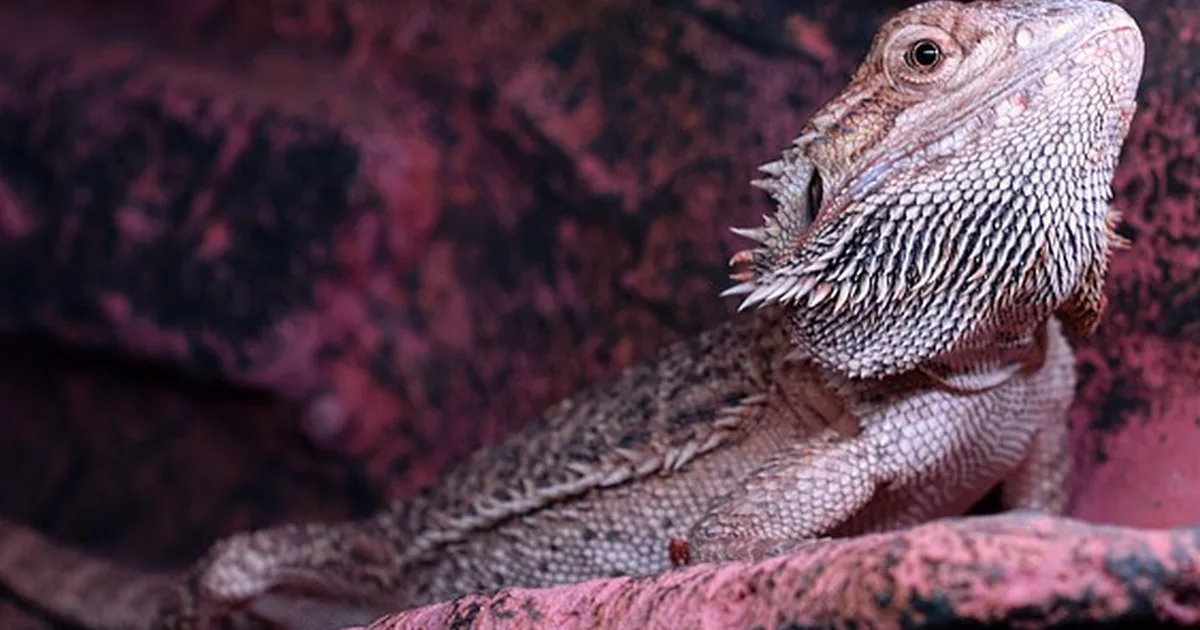
Measure usable floor space, not the label
Internal usable dimensions and continuous floor space matter more than litre capacity, exterior size or tank height.
Measure inside wall to inside wall, behind the door runners, and above the substrate once it has reached its final depth. Do not include a ledge hidden behind a fixed background if the dragon cannot walk on it.
Then check the longest clear route from the basking zone to the cool end. It should allow a full-bodied adult to walk, turn and choose a resting place without squeezing past a water bowl or climbing over sharp décor.
Height is not free space if a branch makes the lamp unsafe.
A T5 HO UVB tube is a high-output linear fluorescent tube; it must be mounted at a distance that matches the tube, reflector, any mesh barrier and the basking surface.
Advertisement
Set up a usable heat, UVB and movement map
Put the basking platform and linear UVB tube together at one end, leave an open route through the middle, and keep a genuinely cooler retreat at the other end.
Where should the UVB tube sit?
Mount a suitable T5 HO UVB tube with a reflector along the warm side, broadly parallel to the basking platform. The dragon should be able to bask with its back exposed to the tube, rather than receiving UVB only while hanging from one narrow branch.
UV Index is the measurement of biologically effective ultraviolet radiation. It is not the same as a tube’s wattage, and a UV Index meter is the only direct way to confirm output at the dragon’s actual basking height.
How much décor leaves room to move?
When replacing an enclosure, compare internal dimensions and access for a full-length UVB tube before comparing decoration or litre capacity. A larger front-opening reptile enclosure can make safe lamp placement and daily cleaning far easier.
- Allows a 120 cm by 60 cm floor area after substrate and furnishings are fitted
- Gives room to create a warm basking end and a separate measured cool end
- Provides practical access for fitting a guarded lamp and linear T5 HO UVB tube
Test four readings before the dragon moves in
Test surface temperature, ambient temperature, UV Index and humidity independently before introducing the dragon.
Which tool checks each condition?
Use an infrared thermometer for surface temperature on the basking platform, branch and cooler floor. Aim it at the exact spot where the dragon’s chest and belly will rest, not at the lamp.
Use digital probe thermometers for ambient air at the warm and cool ends. Use a hygrometer for humidity, positioned away from direct mist, water splash and lamp heat. A thermostat controls the heat source; it does not prove the surface temperature, ambient temperature or UV Index are correct.
What should you measure at perch height?
Measure UV Index and heat where the dragon will perch. A high hammock may look harmless but can bring the animal too close to a tube or lamp, while a low platform may leave it without enough useful UVB.
Check the basking surface, the warm-end air, the middle route and the cool hide. Record readings at least once after lamps have warmed up and again later in the day, because room temperature and lamp output can shift.
Upgrade a flawed starter kit or replace it?
Replace flawed equipment when the enclosure has enough usable floor space, but replace the enclosure when its footprint, ventilation or safe lamp distance cannot work.
Fix these faults without a new vivarium
Fit a suitable linear T5 HO UVB tube and reflector if the internal height and mounting distance allow it. Replace analogue dials with digital thermometers, an infrared thermometer and a hygrometer.
Fit a guarded basking lamp and a suitable thermostat. Reposition bulky furniture so the dragon has a clear route to the cool end. These changes can turn a correctly sized but poorly equipped vivarium into a workable home.
Replace the enclosure in these cases
Replace it if the internal footprint remains below 120 × 60 cm after essentials are installed. Also replace it if the highest reachable perch cannot sit at a safe distance from the lighting, or if door security, damaged surfaces or poor electrical access make safe use unrealistic.
| [Enclosure](https://reptilevivarium.co.uk/your-snake-enclosure-may-fit-yet-fail-welfare/) type | Heat retention | Weight and cleaning | Modification suitability |
|---|---|---|---|
| Wooden vivarium | Usually good insulation | Moderate weight; seal joints carefully | Good for lamp and tube fittings |
| Glass terrarium | Loses heat more readily | Heavy; smooth to wipe | Mesh lids can complicate UVB distance |
| PVC enclosure | Good insulation | Light; easy to clean | Good, if fittings are securely mounted |
| DIY enclosure | Depends on build material | Depends on sealing and construction | Flexible, but [needs](https://reptilevivarium.co.uk/don-t-assume-every-milk-snake-needs-corn-snake-care/) safe electrics and ventilation |
Advertisement
What people ask
Is a 4 ft vivarium big enough for a bearded dragon?
A 4 ft vivarium can suit one adult only if it provides at least 120 × 60 × 60 cm of usable internal space. It must still fit a safe UVB-lit basking area, a cool end and an open route after substrate and décor are added.
Is a 120 gallon tank suitable for a bearded dragon?
A 120-gallon tank is suitable only when its floor dimensions and lighting layout meet the dragon’s needs. Volume alone is not useful if the tank is too narrow, too tall, or loses safe UVB distance through elevated furnishings.
Is a 3 ft vivarium okay for a bearded dragon?
A 3 ft vivarium is generally too short for an adult bearded dragon’s permanent home. It rarely allows a reliable warm-to-cool gradient and adequate movement space, although a vet-led quarantine setup may be different.
What temperature should the basking surface be?
The basking surface commonly needs to reach about 38 to 42°C for an adult dragon, measured with an infrared thermometer. Ambient air and individual needs vary, so check the cool end separately rather than raising every temperature.
Do I need a T5 HO UVB tube for a bearded dragon?
A correctly fitted linear T5 HO UVB tube is widely used for adult bearded dragon vivariums because it covers a broad basking area. Measure UV Index at perch height and follow the lamp maker’s distance guidance, especially through mesh.
Can I use a compact UVB bulb from a starter kit?
A compact UVB bulb should not be assumed to replace a linear tube in an adult setup. It often covers too small an area to overlap effectively with the basking zone, even when it switches on normally.
Does time outside the vivarium make a small enclosure acceptable?
Time outside the vivarium does not make an undersized enclosure acceptable. Supervised handling cannot replace constant access to the correct temperatures, UVB, shelter, water and secure resting places.
What are signs that my enclosure is not working?
Constant glass surfing, staying under one lamp, avoiding the basking area or poor appetite can suggest a setup problem. These signs are not diagnostic, so seek a reptile vet’s advice if they persist or occur with weakness, weight loss or abnormal movement.
- Measure internal floor space above substrate, not the retailer’s outside dimensions.
- Check lamp distance from the highest reachable platform, branch or hammock.
- Measure surface heat, ambient temperature, UV Index and humidity with separate tools.
- Fix lighting and monitoring faults where possible, but replace an enclosure with an inadequate usable footprint.
Learn more
Here are some additional resources on this subject:
- bearded dragon care sheet — rspca.org.uk
- Creating the ideal Bearded dragon setup — reptiles.swelluk.com
- Appropriate enclosure size for your bearded dragon — reddit.com
- UVB can change how you supplement live and frozen food
- A Leopard Gecko Starter Kit Needs a 90cm Enclosure

The Reptile Vivarium Team
Our guides are based on comparing specialised reptile care sources, keeper community input, and recognised husbandry guidelines — we are not vets or professional breeders, and we say so where it matters.
The information on this site is general in nature. For any concerns about the health or welfare of your reptile or amphibian, always consult an exotics vet.