A glass terrarium can look tidy and reassuring. Yet it may quietly work against a veiled chameleon.
Stale air, poor drainage, missed drinks and hot basking zones can cause long-term stress. Illness may not show at first.
Getting the enclosure right is the foundation of kind, long-term care.
A veiled chameleon usually lives 5 to 8 years in captivity. Males often outlive females when care remains good.
Poor UVB, long-term dehydration, stress and egg problems can shorten that range. The true risk is not one missed day. It is a poor setup repeated every day.
Table of Contents
Advertisement
Veiled chameleon lifespan in captivity
A healthy captive veiled chameleon commonly lives between 5 and 8 years.
Males and females age differently
A male often has greater lifespan potential because he does not face the physical cost of making eggs.
Females may live for around 3 to 6 years, though some live longer. Repeated clutches can drain calcium and energy.
Egg binding means eggs cannot pass normally from the body. It can become life-threatening.
Wild figures are not pet forecasts
Wild lifespan estimates are uncertain. Chamaeleo calyptratus faces drought, predators, disease and food shortages in Yemen and Saudi Arabia.
Captivity avoids those dangers. It can also bring stale air, burns, diet-related disease and long-term stress.
A captive lifespan is not guaranteed by living indoors.
Welfare duties in England
In England, the Animal Welfare Act 2006 requires suitable housing and diet. It also requires opportunities for normal behaviour and protection from pain, injury and disease.
The RSPCA offers a useful UK welfare starting point. A reptile vet should make medical decisions for your animal.
Life-stage care gives this lifespan range useful context. Hatchlings and juveniles need close checks on food, growth, hydration and safe branch access.
Young chameleons can decline fast when the heat range is wrong. Adults need stable UVB from a correctly fitted linear tube.
Adults also need controlled heat, clear airflow and effective drainage. Older chameleons benefit from regular weights, grip checks and vet reviews.
Reduced climbing can signal illness, not normal ageing.
For females, a permanent lay bin lowers egg-binding risk. These routines support welfare in mesh setups and well-ventilated glass vivariums.
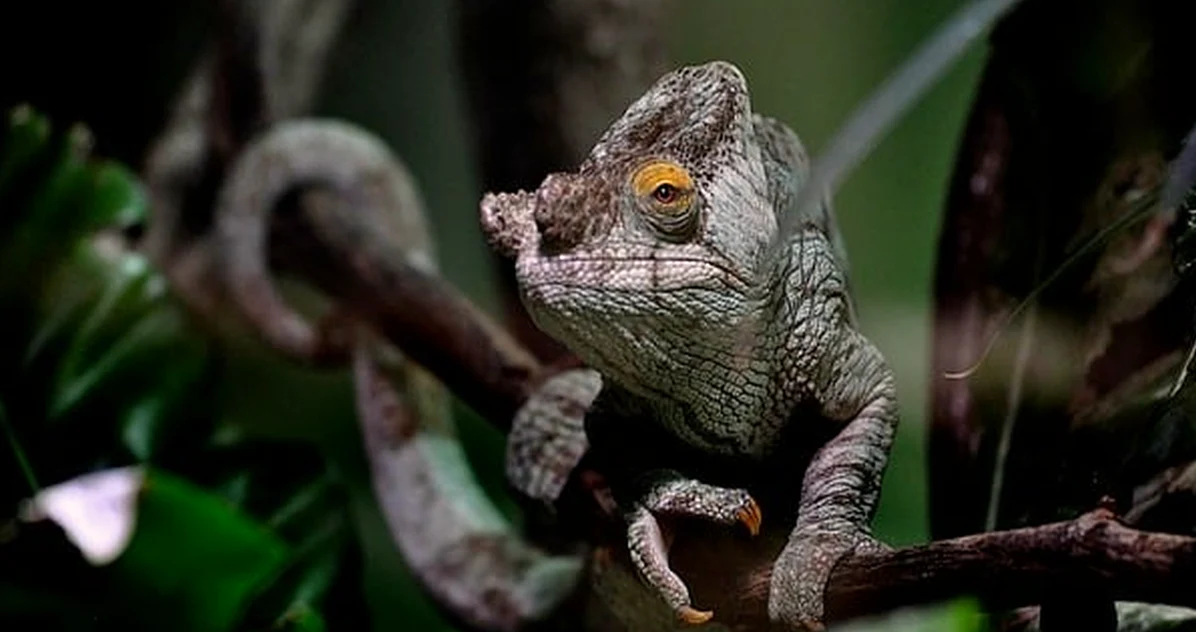
Why females and poor setups lose years
Most preventable losses begin with the enclosure.
The glass-vivarium ventilation trap
A glass vivarium is not always unsafe. Small vents may still fail to create enough cross-ventilation.
Fresh air must enter from one area. Used air must leave from another area.
A tall screen enclosure gives strong airflow. A planned hybrid or glass setup can also work.
However, it must have measured temperatures, drainage and moving air.
The most common mistake is judging airflow by vent size alone. Air must travel through the enclosure, not just sit near a vent.
Heat, UVB and hydration connect
A temperature gradient gives your chameleon a warm basking place and cooler places. Think of it like choosing a sunny seat or shade.
An adult basking area is often 29 to 32°C. Cooler daytime areas are often 22 to 26°C.
Night temperatures are often 16 to 20°C. Use thermostats and digital probes where the chameleon actually sits.
Heat, UVB and water affect each other every day.
Stress has a physical cost
Chameleons are not pets for frequent handling. Repeated handling can keep them alert and unable to settle.
Exposed housing, busy rooms, cats at the glass and reflections can add stress. Dark resting colours, hissing, flattening and escape attempts can show stress.
A calm enclosure gives the animal more chances to rest.
Knowing these risks helps. The next step is building a home that avoids them.
Advertisement
Build an enclosure for a longer life
Build the habitat before buying the chameleon.
For an adult, aim for at least 60 cm wide, 60 cm deep and 120 cm high. This gives room for heat, shade and climbing routes.
Add sturdy horizontal and diagonal branches. Add dense safe plants or artificial foliage.
Your chameleon should reach heat, drinking leaves and cool areas without risky jumps. Height alone is not enough if branches are sparse.
UVB and basking equipment
Use a quality linear UVB tube with a suitable reflector. Follow the maker's distance guide.
Mesh reduces the UVB reaching the animal. Lamps need changing at the stated interval, often every 6 to 12 months.
Visible brightness does not prove the lamp still gives useful UVB. Heat bulbs need guards and suitable thermostats.
A UVB lamp is a health tool, not a decorative light.
Hydration needs observation
Most veiled chameleons drink droplets from leaves. A water bowl is not a dependable drinking source.
Use hand misting, an automatic system or both. Watch the animal drink at least sometimes.
Provide drainage under the enclosure. Pooled water and wet substrate can lead to dirty, damp air and bacterial growth.
Misting only works if the water can drain away safely. A misting system is not enough if water has nowhere safe to go.
Cross-ventilation
UVB and safe heat
Misting and drainage
Better lifespan odds
| Enclosure type | Typical UK setup cost | Ventilation and heat | Main risk to lifespan |
|---|---|---|---|
| Tall screen enclosure | About £180 to £350 before lighting | Excellent airflow, loses heat quickly | Cold, dry rooms without careful heat control |
| Ventilated glass vivarium | About £250 to £500 before lighting | Better heat retention, ventilation varies | Stale air if vents are too limited |
| Bioactive hybrid enclosure | About £400 to £800 before livestock | Can work well, needs planned drainage | Damp substrate and poor maintenance |
The enclosure type matters less than how it works each day. Food and health checks complete that system.
Feed and check the whole system
Food is only one part of a long life.
Offer varied, correctly sized live food. Locusts, crickets, roaches and occasional silkworms are common choices.
Gut loading means feeding insects a good diet before offering them. It is like packing a healthy lunch before sending it on.
Adult females need controlled feeding. This can reduce very large or repeated egg clutches.
Calcium, D3 and UVB work together
Calcium, vitamin D3 and UVB lighting must match. One cannot fully cover for another.
Metabolic bone disease can occur when this balance fails. Weak grip, bent limbs, swollen joints and a soft jaw need a vet assessment.
Do not guess by adding extra supplements. Wrong amounts can also harm your chameleon.
Weekly lifespan checklist
Check this list on the same day each week.
- Temperature: Record basking and cool-zone readings with digital probes.
- UVB: Write down the lamp fitting date and maker's replacement date.
- Hydration: Watch at least one drinking chance and check clear drainage.
- Body condition: Weigh regularly on gram scales. Record any lasting downward trend.
- Movement: Check grip, climbing, eye use and balance on branches.
- Droppings: Note urate colour, stool changes and missed droppings.
- Female risk: Provide a lay bin. Record digging, appetite and possible gravid behaviour.
A reptile vet should check marked lethargy, sunken eyes, falls, weak grip or weight loss. The same applies to suspected retained eggs.
The Royal Veterinary College is a recognised UK veterinary institution. In urgent cases, nearby exotic-vet access matters most.
Small weekly records can reveal trouble before visible decline.
Questions & answers
Can a veiled chameleon live for 10 years?
A veiled chameleon can reach 10 years, but this is uncommon in captivity. A realistic planning range is 5 to 8 years.
Exceptional animals depend on genetics and high-standard care over many years.
How can I tell my chameleon's age?
You cannot reliably measure adult age from size or colour alone. Hatch records from a good breeder are best.
Casque growth and sexual maturity show only a broad life stage.
Is a veiled chameleon a good first reptile?
A veiled chameleon is usually not a forgiving first reptile. Its airflow, UVB, hydration and stress needs are closely linked.
A leopard gecko or corn snake is often easier for a beginner. Neither is a low-care pet.
Why is my chameleon still young but looking old?
A young chameleon can look old or weak after poor care lasting weeks. Common causes include dehydration, weak UVB, poor heat control and stress.
Sunken eyes, weak grip, weight loss, falls and low appetite need prompt reptile-vet assessment.
- A captive veiled chameleon usually lives for 5 to 8 years. This range cannot promise an individual outcome.
- Males often outlive females because egg production and egg binding add serious health risks.
- Fresh airflow, measured UVB, safe heat and observed drinking matter more than a decorative glass vivarium.
- Weekly records of weight, grip, temperatures and lamp dates can reveal trouble before visible decline.
Advertisement
Related sources
These articles can help you explore the topic in more depth:
- What size vivarium or terrarium do I need for my new reptile? — reptiles.swelluk.com
- Bearded dragons — data.parliament.uk
- What Reptiles Make Good Pets: 6 Top Choices for Beginners — reptilecentre.com
- Reptile husbandry: the basics — ukvetcompanionanimal.com
- Ventilation won't make a chameleon vivarium safe
- Don't let a UK vivarium dry out your veiled chameleon

The Reptile Vivarium Team
Our guides are based on comparing specialised reptile care sources, keeper community input, and recognised husbandry guidelines — we are not vets or professional breeders, and we say so where it matters.
The information on this site is general in nature. For any concerns about the health or welfare of your reptile or amphibian, always consult an exotics vet.