A leopard gecko kit is safe with controlled heat, accurate readings, three hides and basic care tools. Décor comes later.
Table of Contents
Advertisement
Buy safe essentials before décor
Buy safety equipment first. An adult Eublepharis macularius generally needs at least a 90 x 45 x 45 cm enclosure. It also needs controlled heat, monitoring, hides, water and cleaning supplies.
The day-one shopping checklist
- Secure-lidded enclosure: Choose 90 x 45 x 45 cm for an adult. It needs ventilation and no escape gaps.
- Heat source and thermostat: Choose a suitable heater. Always control it with a thermostat.
- Two digital thermometers: Put one at the warm end and the other at the cool end.
- Digital hygrometer: This helps you check the humid hide area.
- Three hides: Include warm dry, cool dry and humid hides. Each should be snug enough for body contact.
- Paper towel, water bowl, food dish, tongs and supplements: These cover feeding and cleaning basics.
- Transport box and reptile disinfectant: These support safe trips and hygiene.
Extras that can wait
Leave decorative plants, themed backgrounds and costly ornaments until the safety items are in place. A gecko gains more from a safe hide than from a decorative skull.
The three hides are not optional decoration.
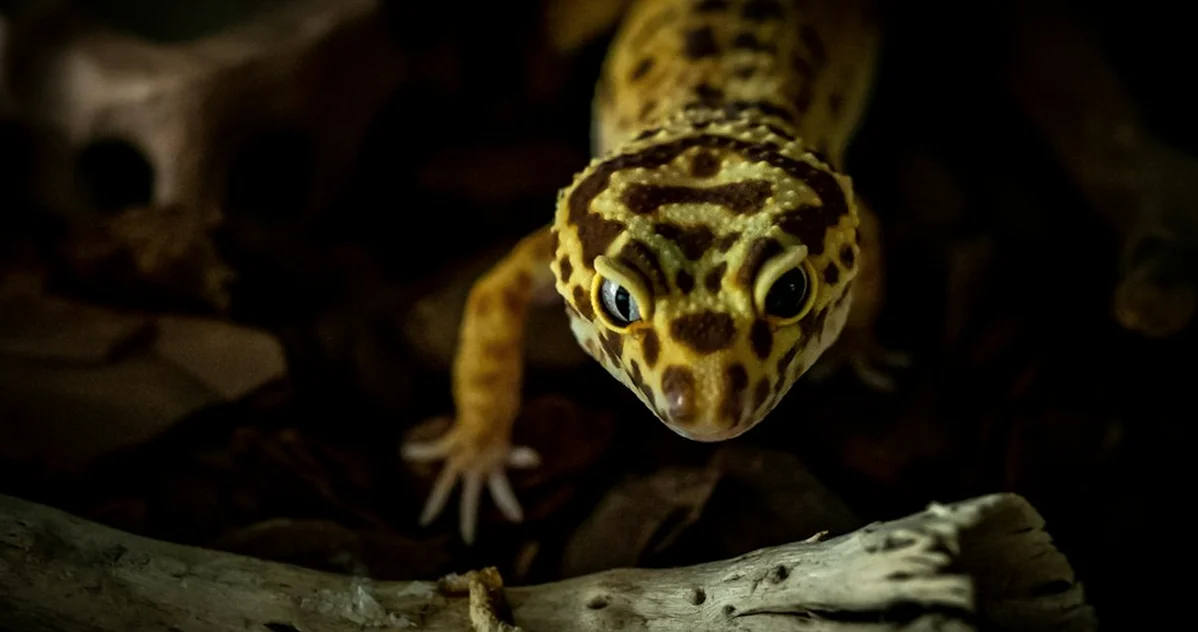
Make starter-kit heating safe
Every heat source needs a thermostat. Aim for roughly 30 to 32°C at the warm-hide surface. Keep a clearly cooler end, often around 22 to 26°C.
Put the probe where heat is measured
Fix a heat-mat probe on the warm-hide floor. It must not move. For overhead heaters, place it at the planned warm area. Fit a heat guard to prevent burns.
Choose light and heat separately
A heat mat can work. A deep heat projector gives overhead warmth when paired with a dimming thermostat. Low-level linear T5 UVB may help when shade is available. It never replaces heat control.
A purpose-made humid hide keeps one sheltered area damp. It avoids soaking the whole vivarium. Choose one with a low entrance that lets the gecko turn around.
- Keeps moist moss or paper towel in one shedding area
- Creates the close, covered space leopard geckos seek during a shed
- Reduces the urge to raise humidity across the whole enclosure
Build the gradient along the enclosure length. Do not make the whole vivarium warm. Put the heat source at one end. Place the warm hide over or beside its controlled warm area. Put the cool hide at the opposite end.
Keep the humid hide between these zones. Move it nearer the warm side if it dries too slowly. Keep moisture local, rather than raising humidity across the enclosure. Secure the thermostat probe where it controls heat. Follow the heater maker's instructions and make sure the gecko cannot dislodge it.
The most common mistake is heating every part of the enclosure.
Place one digital thermometer at the warm-hide surface and another at the cool end. Keep the water bowl away from the hottest area. This limits fast evaporation.
A safe gradient gives the gecko choices. The next decision is what goes beneath its feet.
Advertisement
Choose substrate by age and health
Paper towel is the safest start for hatchlings and new geckos. It also suits geckos with health concerns. Droppings, appetite, shedding and unusual marks stay easy to check.
Avoid calcium sand as a default
Calcium sand is not a safe default. A gecko can eat it during feeding. It hides droppings. It may add to impaction risk when dehydration, poor heat or illness are present.
Adult options need stable husbandry
Healthy, settled adults may use assessed substrate options. Tile is a simple non-loose choice. Loose material does not suit juveniles, recent arrivals or unwell geckos.
Although this can work well in theory, health checks come first. A new gecko on loose substrate can hide the very signs you need to see.
Paper towel makes changes easy to spot. The next section checks whether the rest of a kit supports that care.
Check size, cleaning and kit gaps
A useful enclosure has a clear route between warm and cool ends. Keep décor stable and free from sharp edges. Choose hides that make the gecko feel covered.
Audit a starter kit before use
Starter kits often include sand, one hide and an analogue thermometer. These items do not create a safe gradient. They also do not give a proper shedding area.
| Item | Essential setup | Upgraded setup | Typical England cost |
|---|---|---|---|
| Heat control | On/off thermostat | Dimming thermostat | £25 to £100 |
| Monitoring | Two digital thermometers | Thermometers plus hygrometer | £15 to £45 |
| Shelter | Three simple hides | Naturalistic hides and cork | £20 to £70 |
| Substrate | Paper towel | Tile or assessed adult substrate | £3 to £40 |
Keep tools simple and clean
Match accessories to the gecko. Do not buy oversized or decorative items by default. A hatchling is usually only 5–8 cm long. Many adults reach 18–25 cm, including the tail.
Hides should feel close, not cavernous. Roughly 8–10 cm of inner floor space can suit a small youngster. An adult often needs around 15–20 cm to turn comfortably. Use shallow, tip-resistant water and food dishes. A hatchling must enter them easily.
An adult vivarium can still house a juvenile, but it needs plenty of cover and you must monitor feeding.
Size matters less than secure cover and safe heat.
The recommended adult enclosure size remains at least 90 x 45 x 45 cm. Paper towel is safe for young geckos and helps while you check appetite, stools and shedding.
Price a setup as a full system. Do not judge it by the starter kit alone. In England, an essential adult setup often costs about £180–£320. This excludes the gecko, livestock, electricity and replacement consumables.
That sum can cover a 90 cm enclosure and a compatible heater. It can also cover a thermostat, three basic hides and two digital thermometers. Include a digital hygrometer, paper towel, bowls and feeding tools. A better-equipped setup can cost roughly £350–£650. It may include a quality dimming thermostat and overhead heating. It can also include better décor, a transport box and reptile disinfectant. Spare monitoring equipment can add to the cost.
Add a small digital scale to the care kit. Regular weight records can reveal a change that appearance misses. Check every bundle against this list. Kits often omit thermostats, humid hides, accurate meters and cleaning supplies.
A complete kit prevents costly corrections later. Common questions cover the last buying doubts.
Common questions
What accessories do leopard geckos need?
They need controlled heating, three hides, digital thermometers, a hygrometer, safe substrate, water and feeding tools.
Do leopard geckos need three hides?
Yes, they need a warm dry hide, a cool dry hide and a humid hide. The humid hide supports shedding.
Does a heat mat need a thermostat?
Yes, every heat mat needs a thermostat. Fix its probe at the heated surface. Check that the warm hide reaches 30 to 32°C.
Is calcium sand safe for leopard geckos?
No, calcium sand is not a safe default for leopard geckos. Paper towel is safer for juveniles, quarantine and health monitoring.
What size vivarium does an adult need?
An adult generally needs at least a 90 x 45 x 45 cm vivarium. This space allows a usable warm-to-cool gradient.
Advertisement
Build the safe setup first
Buy the enclosure and thermostat first. Then buy monitoring, hides, substrate and routine-care tools. Décor comes last.
- A thermostat and a correctly placed probe are safety equipment. They are not optional upgrades.
- Three snug hides give the gecko warm, cool and humid choices through the day.
- Paper towel gives the clearest start for juveniles, new arrivals and health checks.
- Two digital thermometers show whether the enclosure has a real temperature gradient.
- Check starter kits against welfare needs. Attractive extras cannot correct unsafe heating.
Further reading
If you want to learn more about this topic, these sources may interest you:
- Northampton Reptile Centre: Reptile Supplies | Live Food ... — reptilecentre.com
- Reptile starter kits range | Swell Reptiles — reptiles.swelluk.com
- A Leopard Gecko Starter Kit Needs a 90cm Enclosure
- Your leopard gecko tank may be too small for adulthood

The Reptile Vivarium Team
Our guides are based on comparing specialised reptile care sources, keeper community input, and recognised husbandry guidelines — we are not vets or professional breeders, and we say so where it matters.
The information on this site is general in nature. For any concerns about the health or welfare of your reptile or amphibian, always consult an exotics vet.