Judge night temperatures at your reptile’s resting level, rather than relying on a single room thermometer. Healthy adult bearded dragons and leopard geckos can usually tolerate about 18°C. Some tropical species need higher minimums.
Most reptiles do not need reptile night heating if the enclosure stays above a species-safe minimum. If an English home becomes colder, use a lightless heater with a suitable thermostat. Secure its probe and check temperatures independently.
Table of Contents
Advertisement
Does your reptile need night heat in england?
Night heat is needed only when the enclosure falls below a safe night-time minimum. Healthy adult reptiles usually benefit from darkness and a modest temperature drop.
Safe night lows for common pets
These are cautious starting points for healthy adults. Measure at animal level. Do not rely on a thermometer fixed to the cabinet wall.
| Species | Typical night range | Act if it falls below |
|---|---|---|
| Bearded dragon | 18 to 22°C | About 18°C |
| Leopard gecko | 18 to 22°C | About 18°C |
| Corn snake | 18 to 22°C | 18 to 20°C |
| Ball python | 22 to 25°C | About 22°C |
| Crested gecko | 18 to 22°C | About 18°C |
A cold spare room can chill the whole vivarium. Log the cool end, sleeping site, and room temperature overnight before buying extra heat.
Tortoises need a species-specific approach to night temperatures. An active adult Hermann’s or Greek tortoise can usually have a cooler night. A tropical tortoise needs more warmth.
Do not allow a tortoise enclosure to stay cold simply because Mediterranean species face seasonal changes outdoors. A red-foot tortoise often needs 21 to 24°C overnight. An active Mediterranean tortoise often has a night-time low of around 18°C.
Age, health, season, and a vet plan can change those figures.
Hatchlings and unwell tortoises need more careful temperature control. The same applies to any tortoise outside a deliberate, expert-led brumation plan.
Keep darkness while giving safe warmth
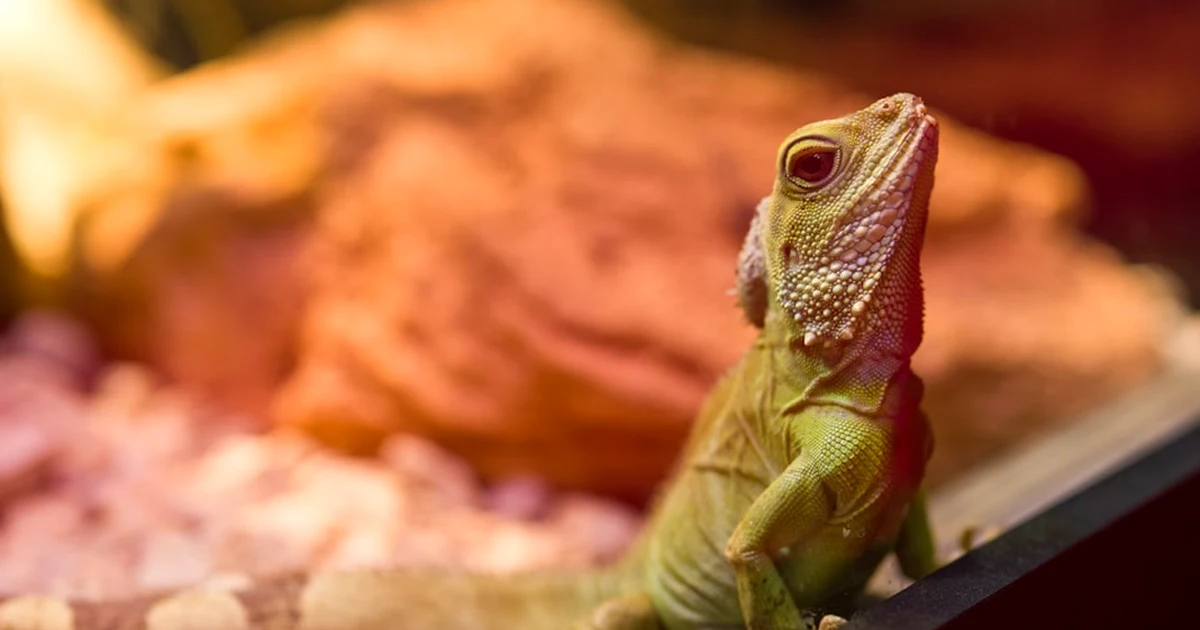
Keep the enclosure dark. Visible red, blue, and “night glow” bulbs can disturb the reptile’s circadian rhythm. This is its internal day-and-night clock.
A drop in temperature is normal
A drop of several degrees is normal for thermoregulation. It is safe only when the species-safe minimum remains in place.
Night should not copy daytime conditions.
Heat can also change humidity
After fitting a heater, check humidity again. This matters most in crested gecko and ball python enclosures.
A heater can dry the air while warming it. Think of central heating drying a room during winter.
Advertisement
Pick a lightless heater for the cold area
Choose a lightless heater for the measured shortfall. It may need to warm air, a surface, or a small floor zone.
Ceramic emitters raise air temperature. Projectors warm overhead surfaces. Panels suit larger vivariums. Mats mainly warm contact areas.
The heater must match the problem you measured.
| Heat source | Best for | Typical UK price | Key limitation | |
|---|---|---|---|---|
| Ceramic heat emitter | Raising air temperature | £20 to £40 | Very hot, needs guard | |
| Deep heat projector | Overhead surface warmth | £35 to £55 | Needs suitable dimming control | |
| Radiant heat panel | Large snake vivariums | £45 to £90 | Usually fixed installation | |
| Heat mat | A small warm hide floor | £15 to £35 | Adds little air warmth |
A ceramic emitter can suit a vivarium that loses too much air temperature overnight. Pair it with the right thermostat, heat guard, and independent thermometer.
- Gives heat without visible light during the dark period.
- Can raise enclosure air temperature when a heat mat cannot.
- Works with a guarded overhead fitting in suitable vivariums.
A heat mat will not fix a cold room. It warms one contact area, not the enclosure air.
Install, control and verify night heat safely
Use every night heater with a thermostat, heat guard, and independent temperature check.
Put the probe at the risk point
Secure the thermostat probe at the hottest accessible controlled point. Follow the heater and thermostat makers’ instructions.
A loose probe can cause dangerous overheating.
Check surfaces, guards and cables
Use an infrared gun for surfaces. Use a digital probe for air at resting level. Keep electrical equipment dry and protect cables.
Safe vivarium night heating keeps a usable thermal gradient. It should not make every enclosure area equally warm. A thermal gradient means the reptile can choose between warmer and cooler spaces.
Set the thermostat to maintain the species-safe minimum at the warm sleeping area or heated surface. Leave a cooler retreat at the opposite end.
The probe must be firmly secured at the heater’s hottest accessible point. A loose probe may read cooler air, allowing dangerous overheating.
For ceramic emitters or radiant panels, check the warmed surface and cool end after lights-out. Check both areas with separate thermometers.
A deep heat projector usually needs a dimming thermostat. A heat mat needs close checks of its contact surface.
Frequently asked questions
Can i leave a reptile heat lamp on all night?
A visible heat lamp should usually stay off overnight because it can disrupt the dark period. Use a thermostat-controlled lightless source if temperatures fall too low.
How cold is too cold for a bearded dragon at night?
A healthy adult bearded dragon needs action near or below about 18°C. Do not run its daytime basking lamp all night.
What is the best night heater for a reptile?
The best option safely fixes your measured temperature shortfall. It must be lightless, thermostat-controlled, and guarded.
Can a heat mat warm a cold vivarium overnight?
No, a heat mat mainly warms its contact surface. It cannot reliably fix low ambient temperature in a cold vivarium.
Advertisement
A safe plan for tonight
- Measure the warm end, cool end, and sleeping site for three to seven nights before buying heat.
- Allow a species-safe overnight drop instead of copying daytime temperatures.
- Use no red, blue, or visible night bulb for routine heating.
- Match the heater and thermostat, secure the probe, fit a guard, then check with an independent thermometer.
Measure first, preserve darkness, and heat only the area below the species-safe minimum.
Use overnight temperature checks before changing equipment. Record temperatures at the warm sleeping site, cool end, and room level. Do this for several nights.
Note the lowest reading before the household heating comes on. This gives a more useful picture than one evening check.
Too much cold can cause unusual inactivity after morning warm-up. It can also lead to poor feeding over time. A cool sleeping hide is another warning sign.
Overheating has warning signs too. These include avoiding the warm end, restless behaviour, open-mouth breathing, or an unexpectedly dry vivarium.
If readings suddenly change, check that the lightless heater is working. Check that the thermostat probe has not moved. Check the guard and thermometer batteries too.
Further reading
If you want to learn more about this topic, these sources may interest you:
- Shop Snake Heat Lamp & Heat Mat UK - Swell Reptiles — reptiles.swelluk.com
- Reptile Heating - Exo Terra, Arcadia — petnpony.co.uk

The Reptile Vivarium Team
Our guides are based on comparing specialised reptile care sources, keeper community input, and recognised husbandry guidelines — we are not vets or professional breeders, and we say so where it matters.
The information on this site is general in nature. For any concerns about the health or welfare of your reptile or amphibian, always consult an exotics vet.