A complete crested diet (CGD) should be the staple, with suitably sized live insects offered as a controlled complement rather than the main meal. A clear routine, correctly mixed fresh CGD and sensible insect portions help support steady condition without guessing from appetite alone.
Table of Contents
Advertisement
CGD first: the rule most keepers reverse
Complete powder is the main meal.
Live insects are useful, but they are not a full feeding plan alone. Crickets, locusts and dubia roaches vary in fat, moisture and minerals, even after good gut loading, while keen hunting does not confirm adequate calcium, vitamin D3 or total nutrient intake.
Complete powder versus homemade purée
Choose a product labelled as a complete diet for crested geckos, checking protein sources, calcium, vitamins, expiry date and storage instructions.
When choosing a complete crested diet, read beyond the flavour on the front of the tub. A suitable complete powdered diet should state that it is formulated as a staple food, list a meaningful protein source and show whether insects are included rather than relying only on fruit ingredients. Check that calcium, phosphorus, vitamins and vitamin D3 are part of the formula, then follow the maker’s advice rather than trying to alter the balance yourself.
Also check the expiry date before purchase, keep the powder sealed in a cool, dry place, and discard it if it develops an unusual smell, moisture clumps or signs of contamination. A fresh, properly stored formula is more useful than an expensive flavour that has been open too long.
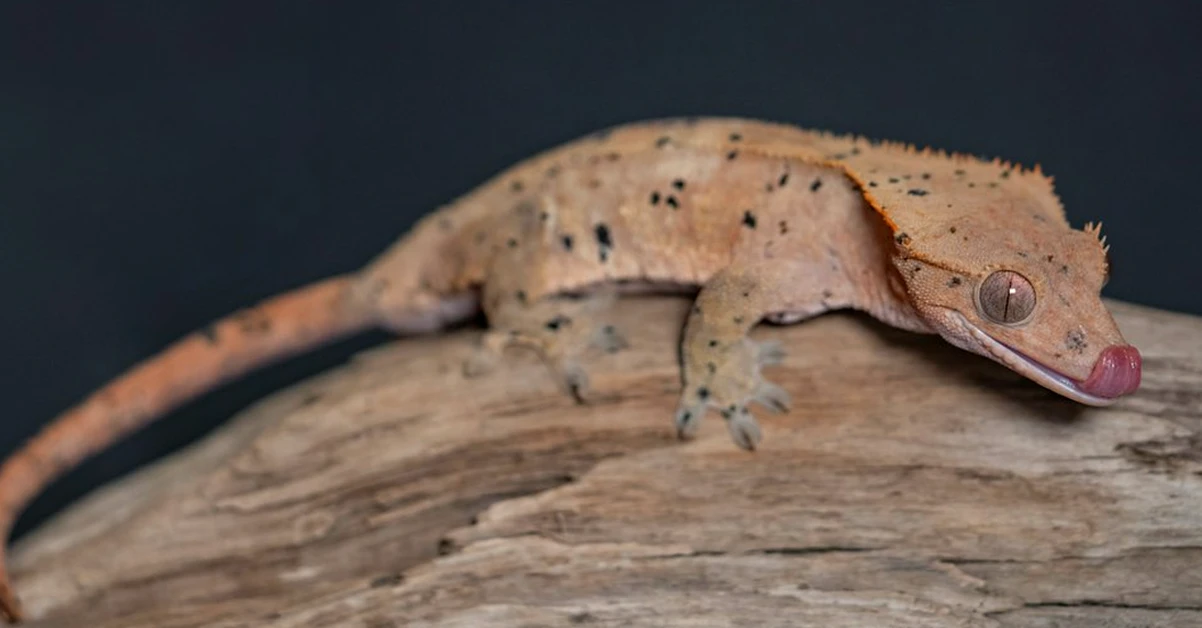
Feed differently at each life stage
Young geckos need more feeding opportunities and closer growth checks, while healthy adults can eat less often if weight and condition stay stable.
A practical weekly feeding calendar
| Life stage | Complete diet | Live insects | Weight check |
|---|---|---|---|
| Hatchling, under 5 g | 5 to 7 evenings weekly | 1 to 2 sessions weekly | Weekly |
| Juvenile, about 5 to 25 g | 4 to 6 evenings weekly | 1 to 2 sessions weekly | Weekly or fortnightly |
| Healthy adult | 3 to 4 evenings weekly | 1 session weekly, sometimes 2 | Monthly |
| Breeding female | Usually 4 to 6 evenings weekly | Individual plan | Weekly |
Mix, serve and remove food
Use the powder-to-water ratio on that product’s label. Serve smooth fresh food in the evening, remove leftovers at the next daily check, wash the dish and never reuse prepared CGD from the previous night.
Feeder insects need control
Choose prey no wider than the distance between the gecko's eyes. Gut-load insects for 24 to 48 hours, then dust them only as directed; do not add supplements blindly to complete CGD.
A consistent crested feeding schedule also depends on how the food is mixed and measured. Start with the powder-to-water ratio printed by the manufacturer, because formulas differ, and aim for a smooth, spoonable consistency rather than a watery drink or a dry paste. Offer a small amount of fresh CGD that the gecko can reasonably finish: hatchlings need only a shallow smear in a small cup, while larger juveniles and adults can be offered more and adjusted from what is actually eaten.
Check the cup and the gecko’s weight trend over several weeks, not just one night. This makes hatchling feeding, a juvenile gecko's diet, adult crested gecko feeding and a breeding female gecko's diet easier to tailor without wasting food or mistaking bowl disturbance for feeding.
Advertisement
Compare UK diets by label, not flavour
The label matters more than the flavour name.
Buy based on complete-diet status, freshness and acceptance rather than claims that one fruit flavour is universally irresistible. Keep powder cool and dry, close the tub tightly and check the expiry date.
| Range and example | Typical UK cost | Label check | Best use |
|---|---|---|---|
| Lower cost, smaller complete tub | About £8 to £10 per 100 g | Complete claim and expiry | Testing acceptance |
| Mid-range, Gecko Nutrition | About £9 to £12 per 100 g | Protein and insect content | Regular household use |
| Premium, Pangea or Repashy | About £10 to £14 per 100 g | Freshness and pack size | Known acceptance or multi-gecko homes |
A small tub of complete gecko food can help establish whether your gecko accepts a formula before you commit to a larger pack. Compare the label and expiry date, rather than buying only by flavour.
- Lets a new keeper test food acceptance without storing a large opened tub
- Supports a staple feeding routine with balanced protein, calcium and vitamins
- Makes it easier to rotate between complete formulas without relying on insects
UK welfare and storage checks
Keep food fresh and stored as directed, and seek veterinary advice for individual health concerns.
Prevent the mistakes that cause poor intake
A clean bowl is not proof of feeding.
Selective eaters and transitions
For a fussy gecko, keep one complete formula available consistently for 10 to 14 days while controlling insects. Weigh the animal regularly and assess trends rather than reacting to one quiet night.
Feeding routines cannot diagnose disease, parasite burden, egg binding or metabolic bone disease.
Avoid using human baby food, sweetened yoghurt, jam, honey, dried fruit, citrus fruit, avocado, rhubarb, chocolate, alcohol or seasoned foods in a crested gecko's diet. These foods may contain unsuitable sugars, acidity, fats, additives or compounds that are unsafe for reptiles, and they do not provide the nutritional balance of a complete formula. Plain fresh fruit can be an occasional tiny treat for a healthy gecko, but it should not become a routine meal or be mixed into every serving of CGD.
Homemade fruit purées are especially easy to overuse because a gecko may enjoy their sweetness while receiving too little protein, calcium and essential micronutrients. Keep fruit separate from the staple diet and use it sparingly rather than as a way to persuade a persistently unwell gecko to eat.
Your questions answered
What is the best diet for a crested gecko?
A complete powdered diet mixed as directed is the best staple. Offer correctly sized, gut-loaded insects one to two times weekly for most healthy geckos.
Do crested geckos need food every day?
Hatchlings may be offered complete food five to seven evenings weekly, while healthy adults commonly need it three to four times weekly. Adults do not normally need insects daily.
How do I know if my gecko eats enough?
Steady weight, normal droppings and stable body shape show intake more reliably than an empty dish. Weigh young geckos weekly and healthy adults monthly.
Can I feed fruit instead of gecko food?
No. Fresh fruit cannot replace a complete powdered diet because it lacks balanced protein, calcium and vitamins.
Should I add calcium to complete gecko diet?
Do not routinely add calcium or vitamin powder to complete CGD. Dust feeder insects only when product instructions call for it.
How long can prepared CGD stay in the vivarium?
Remove prepared food at the next daily check, usually after one night. Warm, damp food can ferment or become contaminated if left longer.
Why has my crested gecko stopped eating?
Reduced intake can occur during shedding, after a move or in cool conditions. Seek veterinary help if it comes with weight loss, lethargy, diarrhoea or regurgitation.
- Make a complete powdered diet the routine meal, not the backup option.
- Match CGD and insect frequency to your gecko's age, weight trend and breeding status.
- Mix fresh food to the maker's directions and remove it at the next daily check.
- Choose UK products by complete-diet status, expiry date and storage guidance before flavour.
Advertisement
Further reading
If you want to learn more about this topic, these sources may interest you:
- Gecko Diet Ltd — geckodiet.uk
- Crested Gecko Food UK | Best Arboreal Gecko Diet & Nutrition — reptiles.swelluk.com
- Heat mat readings aren’t a leopard gecko’s hide floor
- Wooden vivarium vs glass: which suits your reptile?

The Reptile Vivarium Team
Our guides are based on comparing specialised reptile care sources, keeper community input, and recognised husbandry guidelines — we are not vets or professional breeders, and we say so where it matters.
The information on this site is general in nature. For any concerns about the health or welfare of your reptile or amphibian, always consult an exotics vet.